


The one-pot meal Indian homes have made for centuries, for the days when food needs to feel like a belly hug.
The Love For Kitchari
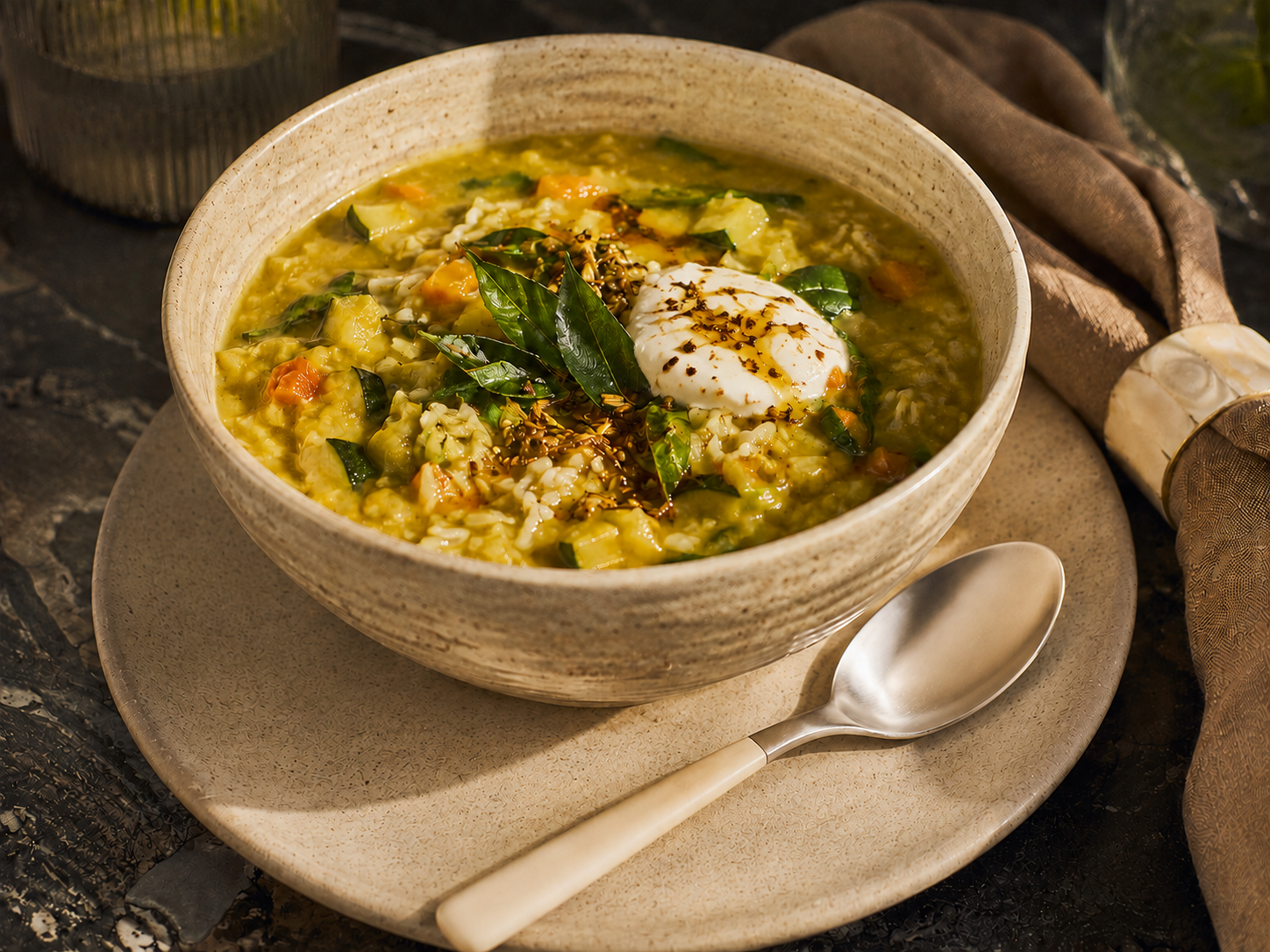
Kitchari is one of the most loved Ayurvedic comfort meals. You make it when you want something simple and easy on the body. It is a soft, cozy one-pot dish of rice, lentils, gentle spices, and vegetables, all cooked down until creamy and nourishing.
At home, when in doubt or running short of time, it is kitchari time.
In Ayurveda kitchari is known as a balancing meal, and here that word means something specific. It is warm. It is soothing. It is easy to digest. Those qualities are what the tradition means when it says a food brings you back to centre, and they are why kitchari turns up again and again in Ayurvedic practice.
It takes about forty-five minutes. The pot does the work while you chop.
One thing that matters. Do not skip the spice oil at the end. The aromatic compounds in cumin, fennel, and mustard seed are fat-soluble, which means they will not release into water. They release into hot oil. That pan is where most of the flavour in this dish is made, so give it your attention and pull it off the heat the moment the mustard seeds have popped.
The Recipe: Warm Kitchari with Rice, Lentils, and Vegetables
Serves 4 to 6. About 45 minutes.
Ingredients
- 1 cup yellow split moong lentils, soaked overnight for at least 2 hours
- 1 cup basmati rice
- 8 cups filtered water
- 1 tsp turmeric
- 2 cups zucchini, chopped
- 1 cup carrots, chopped
- 2 cups spinach, chopped
- ½ cup coconut milk, optional
For the spice oil
- 1½ tsp ghee
- ½ tsp cumin seeds
- 1 tsp fennel seeds
- ½ tsp mustard seeds
- 10 fresh curry leaves
- ½ tsp fresh ginger, grated or finely diced
- ½ tsp coriander powder
- ½ tbsp garam masala
- Toppings of choice
Method
- Drain the soaked lentils and rice into a sieve. Rinse under running water until the water runs clear.
- Add the rinsed lentils, rice, filtered water, and turmeric to a deep cooking pot.
- Bring to a gentle boil, then reduce to medium heat. Place the lid half on and cook for 15 to 20 minutes, stirring occasionally, until the rice and lentils begin to soften and break down.
- While the kitchari cooks, chop the zucchini, carrots, and spinach.
- Add the zucchini, carrots, spinach, and coconut milk if using. Stir well.
- Place the lid back on and let everything simmer for another 20 to 25 minutes, until the rice and lentils are soft and soupy. Stir occasionally so nothing sticks to the bottom.
- If the kitchari becomes too thick before the rice and lentils are fully cooked, add a splash more hot water.
- Make the spice oil. In a small pan, heat the ghee over medium heat.
- Add the cumin seeds, fennel seeds, and mustard seeds. Cook for a few minutes, stirring often, until the mustard seeds pop and the spices smell fragrant.
- Add the curry leaves, ginger, coriander powder, and garam masala. Stir for a few seconds, then remove from the heat.
- To serve, spoon the warm kitchari into bowls and drizzle the spice oil over the top. Add any toppings you love.
Sprinkle a little love, say a gratitude prayer, and nourish yourself.
Notes
- Soaking the moong helps it cook down and gives you a softer texture.
- Kitchari is meant to be creamy and a little soupy. It is not a pilaf. If it thickens as it sits, add hot water and stir until it loosens.
- Coconut milk is optional. It makes the texture softer.
- Ghee is the traditional fat here and gives the spice oil a rounder, nuttier finish. For a vegan version, use vegan butter or coconut oil in its place.
- For more greens, add extra spinach at the end and let it wilt into the hot pot.


